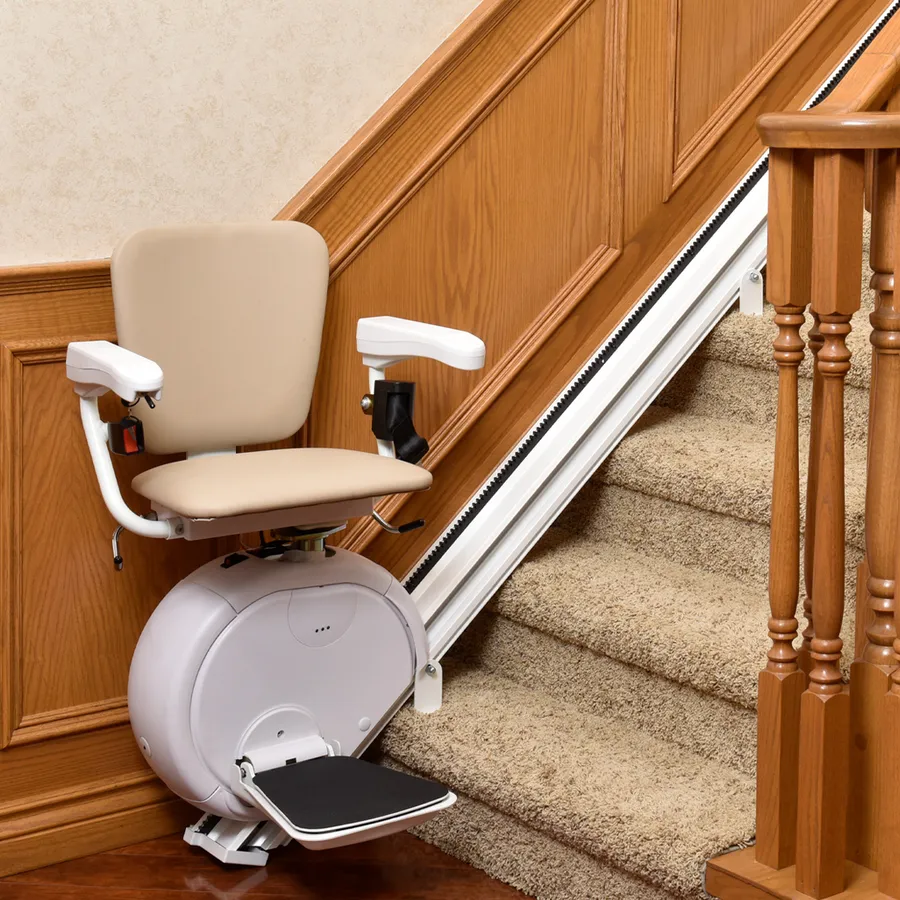
If your stairlift will not move, the cause is often something simple: it is not charging, the key switch is off, something is on the rail or a safety sensor has been triggered. You can check those safely yourself. Do not open any covers or try to repair the drive or rail. If the checks do not fix it, call a qualified engineer.
First, stay safe
If the lift stops while you are on it, stay seated with the belt fastened, and follow the steps in our post on stairlift batteries and power cuts. If you feel unwell, call 999. The checks below are for a lift that has stopped while parked, or that will not start, and you should have someone with you if you are unsteady.
Check 1: Is it charging?
Most stairlifts run on rechargeable batteries and charge when they are parked at the charge point. Many "faults" are a lift that was left slightly short of the end of the rail, so it did not charge overnight.
- Is the lift parked fully at the charge point at the top or bottom of the stairs?
- Is there a charge light or indicator, and does it show as charging?
- Is the socket switched on, and is the plug firmly in? Try a lamp in the same socket to check it has power.
- Have the charging contacts become dirty or blocked by a mat, bag or coat?
If the lift is parked properly and the batteries were flat, leave it for a while on charge and then try again. If it never seems to hold a charge, the batteries may be ageing. They typically last around three to five years.
Check 2: The key switch and isolator
Many lifts have a key switch that turns the power on and off, so the lift cannot be used by children or visitors. It is easy to switch off by accident, or for someone else to have turned it off. Check that the key is in the on position. Some lifts also have an isolator or on/off switch on the carriage, or a separate switch near the charger. Look for these in your manual and make sure they are on.
Check 3: Anything on the rail?
Lifts have sensors that stop them if something is in the way. A shoe, a bag, a walking stick, a pet toy or a loose end of carpet on the rail or the stairs below can stop the lift. Look along the whole length of the rail, from the seat to the end, and remove anything you can see. Do not reach into the mechanism or under the carriage to do so. If you cannot see an obstruction, or it is out of reach, leave it for the engineer.
Check 4: Seat, footrest and belt
Most lifts will not move unless the seat, arms and footrest are in the right position, and the seat is locked in the travelling position. Safety switches in the seat swivel and the belt also have to be satisfied. Check that:
- the seat is swivelled fully back to face the direction of travel and has clicked into place;
- the footrest is fully down, not folded up;
- the armrests are down;
- the seat belt is fastened and not trapped.
Sit down, fasten the belt and try the controls again. People are often caught out because someone has folded the lift away for a visitor or for cleaning.
Check 5: The remote and the controls
If your lift has a remote or call buttons, a flat battery in the remote is a common reason that the lift does not come when called. Replace the batteries with the type shown in your manual. Check the lift moves from the seat controls. If it does, the lift itself is fine and the remote is the problem. Also check that the paddle, switch or joystick is not stuck.
Beeping and error codes
Many lifts beep or show lights to tell you what is wrong. The pattern differs between makes and models, and we do not list codes here, because they are not the same from one lift to another. Look up the signal in the manual that came with your lift, or write down the pattern for the engineer. If you have lost the manual, tell us the make and approximate age on the phone.
What not to do
This matters more than the checks. Do not:
- open the covers on the carriage or the rail;
- try to repair the drive, the motor, the gearing or the rail;
- force the seat or push the lift along by hand;
- bypass a safety switch or tape a sensor down;
- keep using a lift that makes grinding noises, jerks or behaves oddly.
A stairlift carries a person up a staircase. Repairs belong to a trained engineer with the right parts.
When to call an engineer
Call if the lift still will not move after the checks, if it stops mid-flight repeatedly, if it beeps with no obvious cause, or if the batteries will not hold a charge. Our stairlift repairs and servicing team can help, and you can reach us on 01206 625 455 or through the contact page. Have the make, the approximate age and a description of what happened to hand. We cannot promise a fix over the phone, but we can tell you what to check.
Servicing helps prevent faults
Yearly servicing catches worn batteries, loose fixings and dirty charge points before they become a stoppage. Our stairlift servicing and maintenance guide explains what an engineer checks. If your lift has been left unserviced for a few years, it is worth booking a visit before it stops, and the installation and aftercare page sets out what we offer.
Frequently asked questions
Why has my stairlift stopped working?
The common causes are a lift that is not parked at the charge point, a flat battery, the key switch being off, something on the rail, or a seat or belt safety switch that has not been satisfied. Work through those checks, then call an engineer if it still will not move.
Why is my stairlift beeping?
Beeping is the lift telling you something. It can mean low batteries, a poor charge connection or a triggered safety sensor. The meaning of the beeps varies between makes, so check your manual.
Can I fix my stairlift myself?
Only the simple checks, such as parking, the key switch, clearing the rail and replacing remote batteries. Never open covers or try to repair the drive or rail yourself, as that needs a qualified engineer.
Does a stairlift stop working in a power cut?
Most run on rechargeable batteries and keep working for a while. If they run flat they will not charge until the power returns, so avoid unnecessary trips.
stairlift not workingstairlift repairsstairlift troubleshootingstairlift beeping