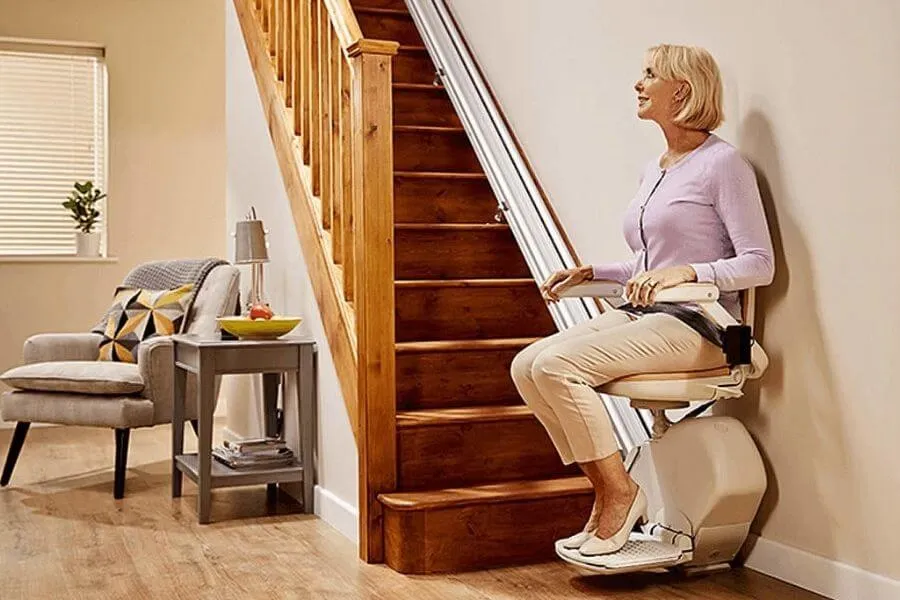
Preparing for a stairlift installation takes about an hour of tidying and a few phone calls. Clear the stairs and landing, make sure there is a plug socket within reach, keep pets and small children out of the way and be at home for the fitting and the demonstration. Most straight stairlifts are fitted in a few hours, so the disruption is short.
Clear the stairs and the landing
The engineer needs the whole flight, plus space at the top and bottom, to work. Before the day:
- Take everything off the stairs, including the things that live on the steps waiting to go up.
- Move pictures, shelves or coat hooks on the wall side if they stick out into the working area.
- Clear the hallway at the bottom and the landing at the top, including shoe racks and baskets.
- Check that nobody has left a bag on the banister, as the engineer will need to reach it.
Stairs are where trip hazards build up. If clearing them leaves you with a pile of things to carry up or down, move them while someone else is in the house to help.
A plug socket near the stairs
Stairlifts charge from the mains but run on batteries, so the lift needs a standard socket close enough for the charger lead. Your surveyor will have noted where it goes at the free survey. If the nearest socket is behind a wardrobe, or hidden behind a sofa, move the furniture ahead of time. If there is no socket close enough, tell us at the survey, as a new socket needs an electrician and is better arranged before the day. Our guide to what happens at a free stairlift survey explains how those details are recorded.
Pets and children
An engineer on the stairs with a rail, tools and a drill is not a place for a curious dog, cat or toddler. Dogs often get anxious about noise and strangers, and cats like to sit exactly where the engineer is about to work. The easiest option is a closed room downstairs with water and a bed, or a friend who can have them for the morning. Please also keep children away from the working area and the tools.
Timing, hospital discharge and the OT
If the lift is for someone coming home from hospital, plan the dates carefully. Next-day installation is often possible depending on availability and stair type, which helps, but a curved stairlift needs a rail made to order, so there is a wait of a few weeks between survey and fitting. If the discharge date is close, let us know at the first call.
If an occupational therapist (OT) is involved, ask whether they would like to be present or to see the lift in use afterwards. Our post on the Essex OT assessment explains what they look at. For funding, the council's grant has its own rules and requires that approval is in place first, so do not book the fitting until you know where you stand. The stairlift grants page has the details.
What noise and mess to expect
A straight stairlift rail is fixed to the treads of the stairs, not the wall. That means no big building work, though there is some drilling into the stair treads, and a small amount of dust. The engineer will usually lay down protective sheets. Expect some noise from the drill and from testing the lift, and expect the engineer to walk up and down the stairs many times.
Curved rails are bigger pieces and may take longer to fit, but the disruption is similar in kind.
Carpets and stair coverings
Fitted carpet is normally left in place, and the rail feet are fixed through it into the wood beneath. If your carpet is old and you are thinking of replacing it, do so before the lift goes in, as lifting a carpet once the rail is fixed is awkward and may need the lift to be refitted or moved. A few points:
- Mention any wood or tile treads at the survey.
- If the carpet is worn or loose at the edges, fix it first.
- Small marks or holes where the rail is fixed are normal and cannot always be hidden.
How long the engineer stays
Straight stairlifts are usually fitted in a few hours. Our guide on how long stairlift installation takes covers curved lifts and longer flights too. Plan to be at home for the whole visit, because the engineer will have questions as they go, such as where you want the lift to park and which side the controls should be.
Who needs to be home
The person who will use the lift must be there for the handover. If they are less confident with change, a relative or carer can be with them as well. Someone over 18 should be in the house throughout the fitting. If you are arranging the installation for a parent who lives elsewhere, you can be there by phone, but it is better in person.
The demonstration at the end
Once the lift is fitted and tested, the engineer will show you how to:
- sit down, fasten the seat belt and use the controls;
- swivel the seat at the top and get off safely;
- fold the seat, arms and footrest back so the stairs stay clear;
- park the lift where it charges.
Ask every question you have, and have each person who will use the lift try it. You will also want to know about the batteries, and our guide to stairlift batteries and power cuts is worth reading afterwards. Keep the manual somewhere easy to find. Our stairlift installation service page explains the whole process, and yearly servicing is covered on the repairs and servicing page.
If you have not yet had a survey, you can book a free home survey and we will talk you through the fitting day.
Frequently asked questions
Do I need to be at home during a stairlift installation?
Yes, someone over 18 should be there for the whole visit, and the person using the lift must be there for the handover. The engineer will ask questions as they go, such as where the lift should park.
How long does the engineer stay for a stairlift fitting?
A straight stairlift is usually fitted in a few hours. Curved lifts and longer or more complex flights can take longer.
Do I need to replace my stair carpet before a stairlift is fitted?
No, the rail is normally fixed through the carpet into the treads. If you were planning to replace a worn carpet, though, it is easier to do that before the lift goes in.
What should I do with pets on fitting day?
Keep them in a closed room downstairs or with a friend. The engineer needs a clear, calm working area, and noise and unfamiliar tools can upset animals.
stairlift installationfitting dayinstallation checkliststairlift preparation
More in Installation and aftercare
- Stairlift installation: the complete guide
- How Long Does Stairlift Installation Take?
- Selling or Removing an Old Stairlift
- Stairlift Batteries and Power Cuts: What Happens?
- Stairlift Not Working? Safe Checks Before You Call for Repairs
- Stairlift Servicing and Maintenance Guide
- What Happens at a Free Stairlift Survey?