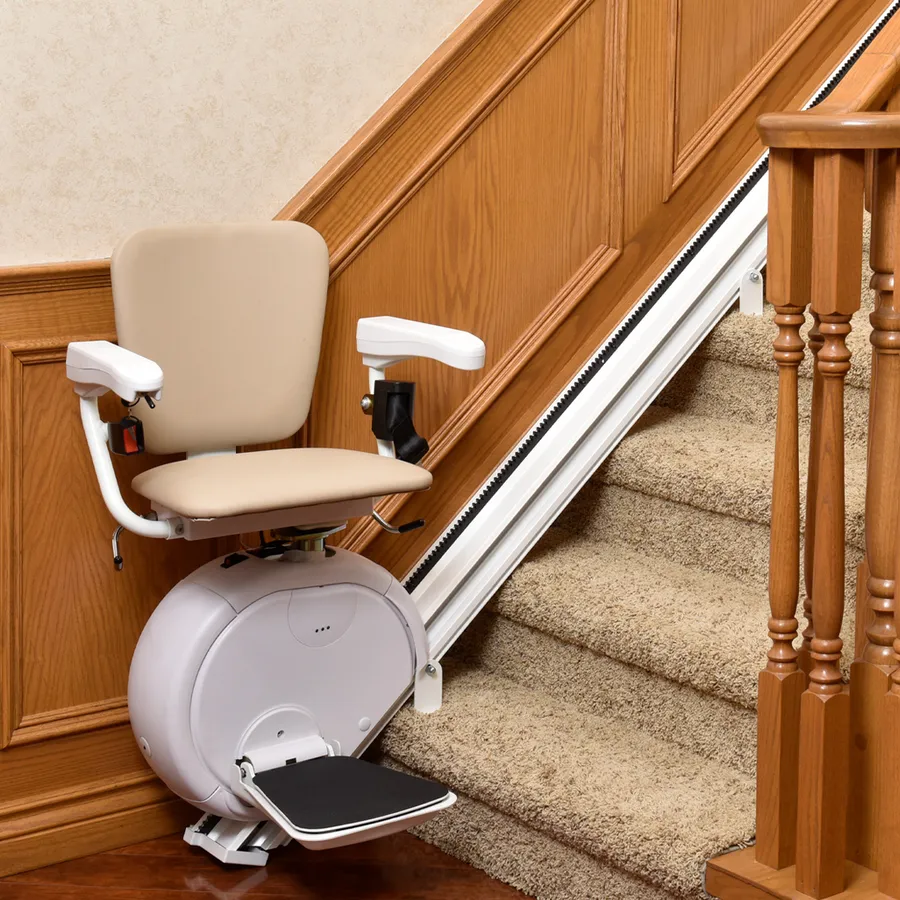
A stairlift is cheap to run compared with what it costs to buy. The electricity is a small, background expense because the lift only has to top up its batteries between journeys. The costs that deserve your attention are the ones that arrive in lumps: a new set of batteries every few years, an annual service, and the occasional repair once the warranty has ended.
We have not put a pence-per-year electricity figure in this article, because it depends on the lift, your tariff and how often you ride. What we can do is explain where the money goes, so that you can ask the right questions before you sign anything.
Electricity: the smallest line on the bill
Most home stairlifts run on rechargeable batteries. The motor on the carriage is driven by those batteries, and the mains supply only recharges them when the lift is parked at a charge point. That is very different from a kettle or a heater drawing power the whole time it is in use.
In practice, a lift sits on charge most of the day and uses a short burst of battery for each trip. Some lifts also draw a very small amount of power while parked, to keep the batteries topped up and the controls ready. The result is that most households will not notice the lift on their electricity bill. If you want a figure for your exact model, ask the installer for the manufacturer's power rating and work it out against your own tariff. Do not rely on a number from a forum, because lifts differ.
Parking the lift on its charger every night is what keeps that charging cycle working properly.
Batteries: the cost that comes round every few years
Batteries wear out. Stairlift batteries typically last around three to five years, although age, how often you ride and whether the lift is parked on its charger every night all make a difference. A lift that is left part way up the stairs does not charge, and a battery that is regularly run flat will age faster.
When you are comparing quotes, ask three things:
- How much does a replacement battery set cost for this lift, fitted?
- Is the first set included in the warranty, and for how long?
- Are replacements widely available, or ordered in specially?
Reconditioned lifts are usually sold with new batteries fitted, which means the clock starts again on that cost. That is one of the points covered in our look at reconditioned stairlifts.
Servicing: the one predictable cost
Servicing is the running cost you can plan for. An engineer checks the rail, the drive, the safety edges, the seat swivel, the footrest and the batteries, and puts right small problems before they turn into breakdowns. The battery test matters most, because a battery can show a healthy surface charge and still be close to failing.
The price depends on how it is sold. Some suppliers include servicing for a period, some sell it as a yearly contract, and some charge per visit. As a rough guide, annual servicing on a curved lift is around £280 to £320 if you pay for it separately. Straight lifts are often a little simpler, but we would rather not quote a figure that your installer will not stand behind. The survey and the written quote should tell you what is included, what it costs afterwards, and what happens if you miss a year.
Our servicing and maintenance guide explains what an engineer actually does on a visit, and the repairs and servicing page sets out what we offer.
Repairs and parts after the warranty ends
Most new lifts come with a warranty for the first year or longer, and reconditioned lifts are covered for at least the first year. While you are inside that period, genuine faults should not cost you extra. After it, repairs are paid for, and the usual suspects are batteries, charging contacts, the seat swivel mechanism, the controls, and on outdoor lifts, weather-related wear.
Two things are worth asking at the quoting stage:
- What does the warranty cover? Parts only, or parts and labour? Is there a call-out charge?
- Will the engineer be able to get parts in ten years' time? Lifts from well-established makes are generally easier to support, but ask rather than assume.
Care at home also keeps costs down. Keep the rail clear, park the lift on its charger every time, do not overload it, and report odd noises early.
Putting running costs against the purchase price
Take a typical new straight lift. Installed prices run from about £2,475, and most land between £2,500 and £3,200. A curved lift starts at about £4,500 and commonly costs £5,500 to £7,000 (see curved stairlift cost explained for why). Our UK stairlift price guide covers the full range. Against figures like that, the yearly cost of electricity is very small, and a service is a modest fraction of the purchase price. Batteries are the bigger item, but they come around only every few years.
That is useful when you weigh up options. A cheaper lift with a short warranty and poorly available parts can cost more over ten years than a better supported one. A reconditioned lift can look like a bargain on day one, but check what has been replaced and what the warranty covers. And if you only need a lift for a few months, renting rather than buying may remove many of these costs, since maintenance is normally part of a rental.
The honest summary: figures vary by lift, supplier and tariff, and we cannot give you one number that fits every home. What you should get from any decent supplier is a clear statement, in writing, of what servicing costs, what the warranty includes and what a battery replacement will be.
Next steps
If you want to see the purchase side first, the Colchester stairlift cost page has a price calculator. For a figure that fits your own staircase, you can book a free home survey. There is no obligation, and we will tell you plainly what the lift is likely to cost to own, not only to buy.
Frequently asked questions
How much electricity does a stairlift use?
Very little. The lift runs on rechargeable batteries and the mains only tops them up, so most households will not see a noticeable change on the bill. For an exact figure, ask your installer for the power rating of the model and compare it with your tariff.
How often do stairlift batteries need replacing?
Typically every three to five years, depending on use and whether the lift is parked on its charger. A battery that drains faster than it used to is the clearest early sign.
Do I have to pay for servicing a stairlift?
Servicing is strongly recommended once a year, and some suppliers include it for a period. If you pay separately, a curved lift is roughly £280 to £320 a year. Your quote should state exactly what is covered.
Are stairlift repairs expensive after the warranty ends?
It depends on the fault. Batteries and small parts are the common ones, and costs vary by make and supplier. Ask for call-out and parts pricing in writing before you buy, so there are no surprises.
stairlift running costsstairlift electricitystairlift servicingstairlift batteries