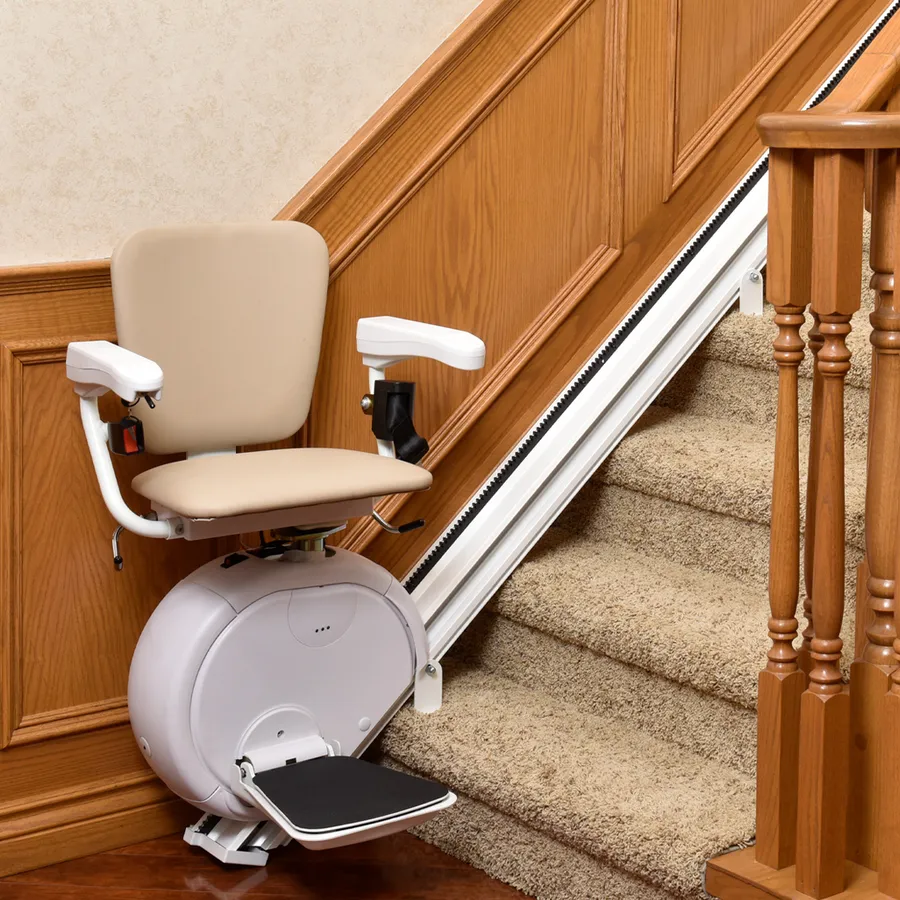
You can pay for a stairlift without a grant by combining several routes: claiming 0% VAT if you are chronically sick or disabled, choosing a reconditioned lift from £1,785, renting from around £50 a month, using savings or help from family, or asking about other local support. None of these needs council approval, and most can be combined.
Grants are worth trying, but funds are limited and nothing is guaranteed. If you are waiting, refused or simply do not want the delay, here are the realistic alternatives.
1. Claim 0% VAT if you qualify
This is the quickest saving, and it needs no application. If you are chronically sick or disabled and the stairlift is for your own home, you can sign a declaration and pay 0% instead of 20% VAT. That removes one sixth of the VAT-inclusive price: about £1,100 on a £5,500 curved lift, or roughly £415 on a £2,500 straight one.
Eligibility is your own declaration. The supplier cannot decide it for you, and the official wording is on GOV.UK and with HMRC. Read our guide to stairlift VAT relief first.
2. Choose a reconditioned stairlift
Reconditioned straight stairlifts start at £1,785 and go up to about £2,800, compared with a new straight lift from about £2,475. They are refurbished, serviced, fitted with new batteries and upholstery, and come with a warranty, with the first year at least.
The trade-off is choice. You get fewer colours and options, and for a curved staircase the rail must fit your stairs, so reconditioned curved lifts, from about £4,450, depend on the survey. Details are on our reconditioned stairlifts page, and the comparison of new and reconditioned lifts goes further.
3. Rent instead of buying
Rental starts at around £50 a month, usually with an upfront payment covering fitting and the first months. It suits short-term needs, such as recovery from surgery or a wait for a grant decision. Guidance in the Age UK style says renting is usually cost effective for up to about 18 months.
After that point buying works out cheaper. Our post on renting or buying a stairlift does the sums.
4. Use savings or ask family
It is not glamorous, but it is common. Adult children often club together, particularly when the alternative is a fall, a hospital stay or a move into care. If you go this way:
- Agree who owns the lift and who pays for servicing.
- Remember the VAT declaration is made by or for the person using the lift.
- Keep the invoice and warranty papers somewhere the whole family can find.
Think carefully before using money you may need for other care costs. A lift cheaply bought now is not a saving if it leaves you short elsewhere.
5. Ask about charities and local support, in general
Some charities and local organisations offer help with equipment or home adaptations, often limited to particular groups, conditions or areas. We cannot vouch for individual schemes, so we do not list any here. Good places to start are your occupational therapist, your GP surgery, your local council's adult social care team and local advice services, who may know what is currently available and who is eligible. Always check the eligibility and what the charity will and will not fund before you rely on it.
6. Check what your local council offers
A council route is not a grant in the traditional sense, but it may still reduce the cost. Colchester City Council runs a Stairlift Grant, and it is not means tested. It funds a stairlift only where it is needed to reach essential rooms such as a bedroom or bathroom, the property and lift are suitable, and funds are available without affecting mandatory Disabled Facilities Grant money. Homeowners do not repay the first £5,000, and anything above that becomes an interest free charge for 10 years, capped at £10,000.
If you are outside Colchester, your own council will have its own rules. A standard Disabled Facilities Grant elsewhere in England is means tested and capped at about £30,000, so the Colchester route is simpler for stairlifts alone. Our Colchester stairlift grants page sets out the funding picture, and how to apply for the Colchester stairlift grant lists the steps.
7. Compare quotes and ask for a price match
It sounds obvious, but quotes for the same type of lift can differ by hundreds of pounds. Compare like for like: same rail type, same seat specification, same warranty, same servicing terms. We offer a price match on like for like systems. We are independent and advise across the major brands, so you are not limited to one range.
How to combine the options
Here is a worked example. Say a new straight stairlift is quoted at £2,800, including VAT.
- With a 0% VAT declaration, the price falls by about £467 to roughly £2,333.
- A reconditioned straight lift at, say, £2,000 with VAT would fall to about £1,667 with the declaration.
- A short-term rental might cost around £600 over a year, plus the upfront payment.
These are illustrations, not quotes, but they show how the choices stack up. Before you choose, decide how long you expect to need the lift. See also our stairlift cost page for the calculator.
Where to start
- Decide whether to try the council route first. If so, book an occupational therapy assessment through Essex County Council on 0345 603 7630 for adults.
- In parallel, ask for a survey so you know the real price.
- Choose between new, reconditioned and rental once you have the figures.
A free home survey gives you a written quote with no obligation, and we will explain every option honestly, including the cheaper ones.
Frequently asked questions
What is the cheapest way to pay for a stairlift without a grant?
For most people it is a reconditioned straight lift from £1,785, with a 0% VAT declaration if they qualify. Renting from around £50 a month is cheaper in the short term.
Can I get help from a charity?
Some charities and local organisations help with equipment, but schemes vary and have their own eligibility rules. Ask your occupational therapist, GP surgery or local council's adult social care team what is currently available.
Is the Colchester Stairlift Grant the same as a Disabled Facilities Grant?
No. A standard DFG is means tested and capped at about £30,000, while Colchester City Council's Stairlift Grant is a separate, simpler route that is not means tested. Funds are limited.
Can I combine 0% VAT with a reconditioned or rented lift?
The VAT declaration is about the tax on your purchase and you can ask about it with any supplier. Ask for the VAT treatment to be shown on any quote, including rental.
stairlift fundingstairlift costVAT reliefreconditioned stairliftrental