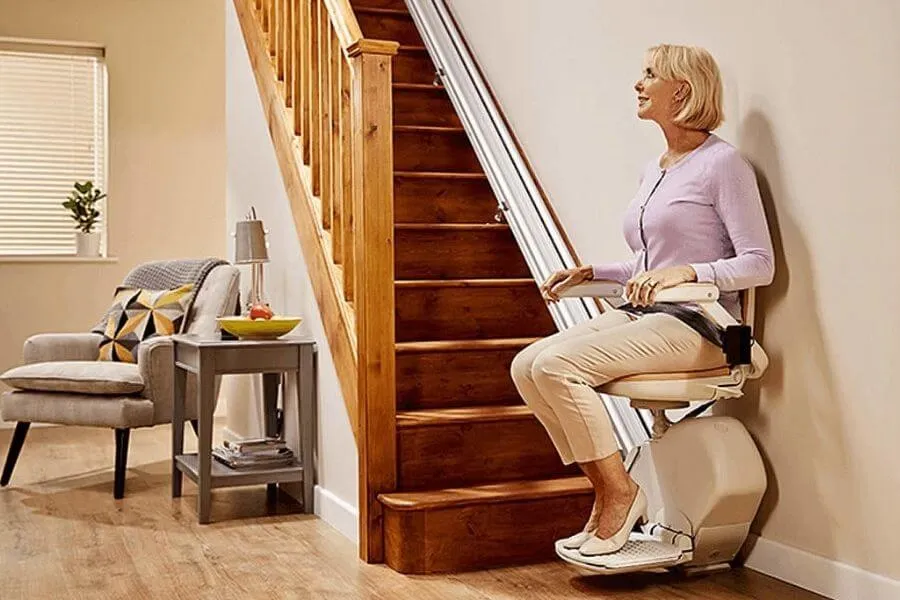
Yes, tenants can usually have a stairlift, but you need your landlord's permission first, and in Colchester you should contact Colchester Borough Homes on 01206 282971 before doing anything else. They may arrange or fund the adaptation themselves. Do not order a lift privately and then ask afterwards, because fixing a lift to the stairs is an alteration to the property.
Start with your landlord
A stairlift is bolted to your staircase, and the stairs belong to your landlord. In a council or housing association home that means asking permission, whether you pay for the lift or someone else does. Your tenancy agreement will usually say that alterations need written consent.
If you are a Colchester Borough Homes tenant, ring them on 01206 282971. If your landlord is a different housing association, check your tenancy paperwork for the repairs or adaptations number and ask for the team that deals with disabled adaptations.
What to say when you call
- That you or someone in your household is finding the stairs difficult.
- That you would like to know how the landlord deals with stairlift requests.
- Whether they will assess, fund and install it, or whether you can buy your own.
- Who would be responsible for servicing and repairs.
Ask for answers in writing. It is easier to resolve a misunderstanding if you have an email to point to.
Who pays?
There are three common outcomes, and which applies depends on your landlord, your circumstances and available money.
- The landlord funds it. Many landlords have a budget for adaptations to help tenants stay at home. They normally arrange the fitting through their own contractors.
- A grant covers it. Colchester City Council's Stairlift Grant is not means tested, but funds are limited and approval is not guaranteed. It usually depends on an occupational therapist assessment. See how to apply for the Colchester stairlift grant.
- You pay. With landlord permission you can buy or rent privately. You may be able to pay 0% VAT if you are chronically sick or disabled, which is a self-declaration.
Note that the grant explanation for homeowners, where the first £5,000 is not repaid and any excess becomes a charge on the property, does not apply to tenants in the same way. Ask the council and your landlord how the rules apply to you.
Get the occupational therapy assessment
An occupational therapist (OT) assessment is the key step, whoever pays. Landlords usually want an OT recommendation before agreeing to adaptations, and the council needs one for the grant.
Book it through Essex County Council: 0345 603 7630 for adults, 0345 603 7627 for children and families. Our post on the occupational therapy assessment in Essex explains how to prepare.
Common questions about permission and conditions
Can the landlord refuse?
They can, though a refusal for a genuine need would normally need a reason, such as the staircase being unsuitable or a fire safety concern, for example if a staircase is a shared escape route and the lift narrows it. Ask for the reason in writing. A survey can help here, because an engineer can measure what width is left with the rail fitted.
What about flats and shared stairs?
Communal stairs bring extra considerations, including fire escape widths and the other residents. In a house with its own staircase, it is simpler. A stairlift inside your own flat, on stairs that only you use, is more straightforward than one in a shared stairwell.
What happens when I move out?
This is the point to agree up front. Two outcomes are common. Either the landlord keeps the lift, if they funded it and it suits future tenants, or you remove it at the end of the tenancy and the stairs are made good. If you bought the lift, you may be asked to remove it and repair any marks. Removal costs around £200 for a straight lift and up to about £350 for a curved one, and older units may attract a fee. See the stairlift removal page.
Could I take the lift with me?
A straight stairlift rail is cut for a specific staircase, so it is rarely reusable elsewhere, though the seat and carriage may be. A curved rail is made for one staircase only. In practice, a lift is usually sold on or recycled rather than refitted.
Adaptations beyond the stairlift
While you are talking to your landlord, ask about the rest of the home as well. Grab rails, a level access shower or a second banister may be quicker to arrange than a lift and could be part of the same occupational therapist recommendation. A stairlift solves the problem of reaching the bedroom and bathroom, but it is worth knowing about every option before you commit.
If you want a lift quickly
Waiting for a landlord or a grant can take time. If you need a lift sooner, renting from around £50 a month may bridge the gap, subject to your landlord's consent. See paying for a stairlift without a grant for the full list of options.
What we can do
We cannot give permission, and we cannot promise funding. We can survey the stairs, tell you honestly whether a lift will fit, and give you a written quote that you can show your landlord or the council. It costs nothing and carries no obligation. Our engineers are DBS checked, and we are a family-run business and members of the BHTA. Book a free home survey when you are ready. For more on the wider routes, see the Colchester stairlift grants page.
Frequently asked questions
Do I need permission to fit a stairlift in a council house?
Yes. A stairlift is fixed to the staircase, so you need your landlord's written consent first. In Colchester, ring Colchester Borough Homes on 01206 282971 before you order anything.
Will the council or housing association pay for my stairlift?
Sometimes. Some landlords fund adaptations, and Colchester City Council has a Stairlift Grant that is not means tested. Funds are limited and nothing is guaranteed, so ask both.
What happens to the stairlift when I leave the property?
It depends on who paid and what you agreed. The landlord may keep it, or you may need to have it removed and the stairs made good. Agree this in writing before installation.
Do tenants need an occupational therapy assessment?
Usually yes, for both landlord funding and the council grant. Book it through Essex County Council on 0345 603 7630 for adults.
council tenantshousing associationColchester Borough Homesstairlift permission